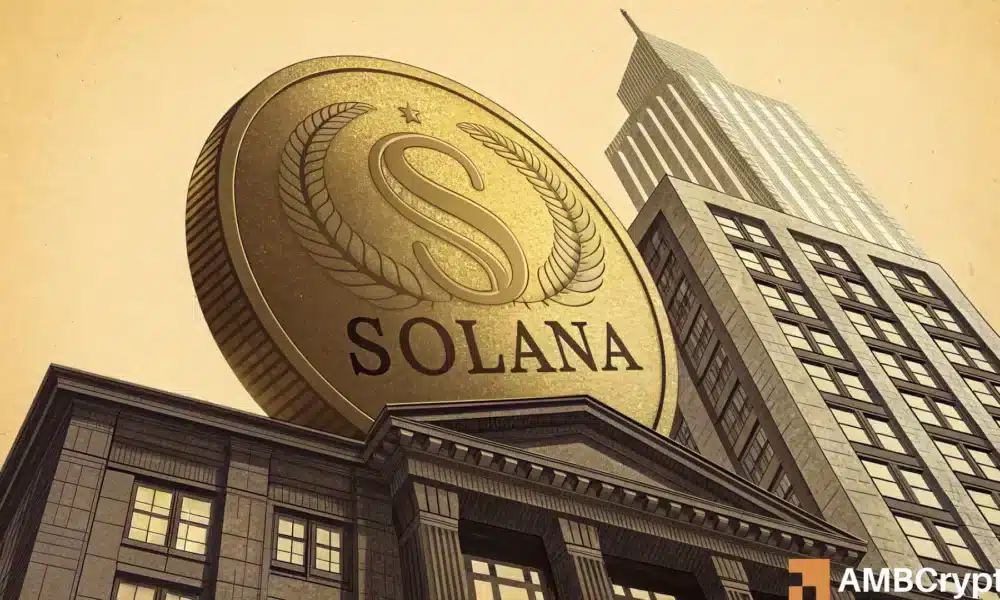
Solana ETF: A Game Changer for the Crypto Market?
The year 2026 has started off strong for altcoins, with institutional interest in cryptocurrencies ramping up significantly. Among the most prominent developments is Morgan Stanley’s filing for a Solana ETF, reigniting the debate between Solana (SOL) and Ethereum (ETH), two of the largest Layer-1 blockchains. This news has added fuel to an already active altcoin market, with many wondering how it might shift the landscape of decentralized finance (DeFi).
Why Solana? The Institutional Angle
For context, Solana began the year with strong momentum as Morgan Stanley, one of the largest banks in the world with $6.4 trillion in assets under management (AUM), officially filed an S-1 registration for the “Morgan Stanley Solana ETF Trust” with the U.S. Securities and Exchange Commission (SEC). This filing marks a significant step in narrowing the divide between traditional finance (TradFi) and decentralized finance (DeFi).
This announcement is particularly intriguing given Morgan Stanley’s lack of a similar filing for an Ethereum ETF. Analysts suggest this strategic focus on Solana hints at the blockchain’s growing appeal and potential to outpace Ethereum in certain areas of DeFi adoption.
Market Dynamics: How SOL Stacks Up Against ETH
As altcoin movement picks up, the Altcoin Season Index has reached levels not seen since late 2025. While Bitcoin (BTC) ETFs saw $240 million in net outflows earlier this month, Ethereum ETFs welcomed $115 million in inflows, with Solana ETFs picking up $9.2 million. Although these may seem like modest numbers compared to ETH, Solana has shown stronger on-chain performance recently, gaining roughly 9% in total value locked (TVL) in just a week, outpacing Ethereum’s 6% growth during the same period.
Solana’s efficiency, scalability, and low transaction fees make it an attractive blockchain for developers and investors alike, which could explain its rising appeal among institutional players. The SOL/ETH ratio has already increased by 3%, bouncing off key support levels that previously sparked significant rallies in the market.
The Broader Implications
Institutional backing, such as Morgan Stanley’s ETF filing, demonstrates growing confidence in Solana as a viable competitor to Ethereum. This could encourage more capital flows into the SOL ecosystem, potentially creating a ripple effect across related sectors like decentralized applications (dApps) and non-fungible tokens (NFTs).
Additionally, retail investors looking to leverage this momentum should consider high-quality investment tools. For example, the Crypto Tracker Pro, a portfolio management app, can help monitor your SOL and ETH investments with real-time analytics.
What’s Next for Solana and Ethereum?
As we move further into 2026, Solana’s upward trajectory may signify a shifting preference among institutional players. With the altcoin market diversifying and multiple blockchains carving their own paths, investors would be wise to keep a close eye on developments like Morgan Stanley’s ETF launch. Whether Solana can sustain this momentum and inch closer to Ethereum remains to be seen, but one thing is clear: the competition between these two blockchains is just heating up.


