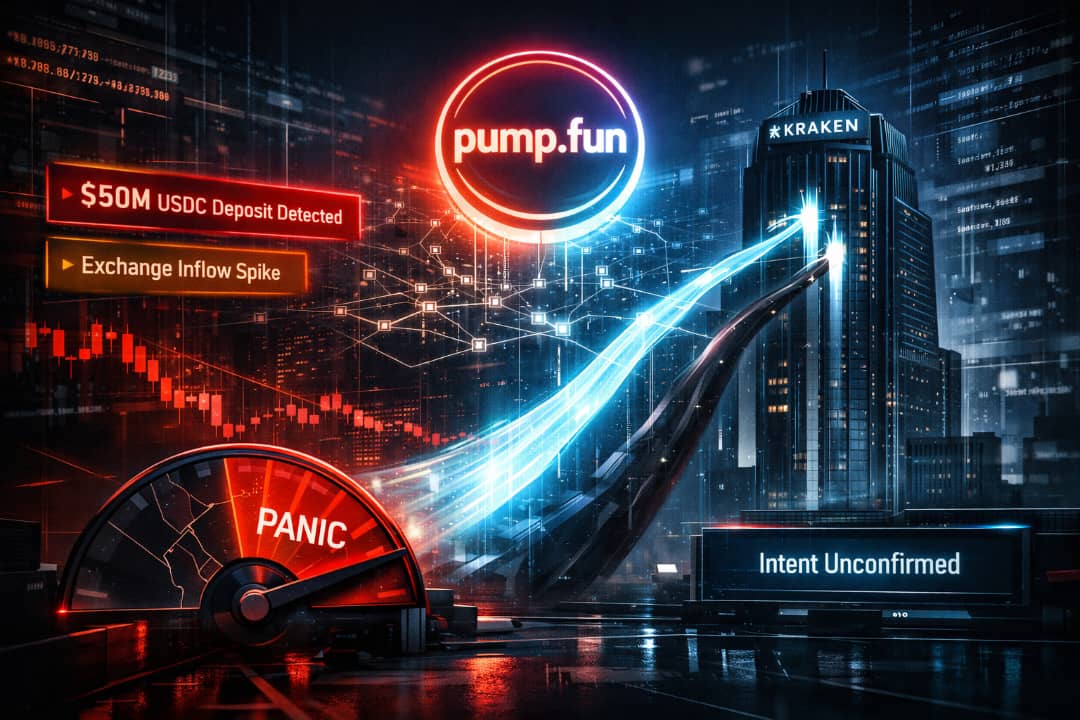
Over the past few hours, the cryptocurrency landscape has been buzzing with speculation as another set of large-scale transactions hit the blockchain. At the heart of the commotion is pump.fun, a memecoin launchpad whose recent moves have reignited concerns across the crypto sector. According to on-chain trackers, pump.fun-linked wallets deposited approximately $50 million in USDC into the Kraken exchange, sending Crypto Twitter into a frenzy. But what’s really going on here? Let’s break it down.
What Happened with Pump.fun?
On-chain data from Lookonchain revealed that since October 15, pump.fun wallets have collectively deposited $617.5 million in USDC into Kraken. During the same period, $1.1 billion in USDC moved from Kraken to Circle via a wallet associated with redemptions. Historically, Kraken-to-Circle flows are often tied to stablecoin-to-fiat conversions, fueling fears that pump.fun is quietly cashing out large sums.
Between May 2024 and August 2025, pump.fun also reportedly sold $757 million worth of SOL tokens, adding further weight to claims of value extraction. Such large treasury movements often cause unease in the market, as traders equate exchange deposits with potential sell-offs, impacting liquidity and sentiment.
Market Sentiment vs. Reality
The emotional reaction from the crypto community was swift. Social feeds were flooded with accusations of pump.fun liquidating its holdings, leading to panic-driven market behavior. Yet, on-chain data reveals only the flow of funds — not the intent behind the movements. While many interpreted these transactions as a cash-out, pump.fun’s co-founder argued otherwise, citing treasury operations unrelated to direct redemptions or exits.
This discrepancy highlights a recurring issue in the crypto space: the gap between perception and technical activity on the blockchain. Exchange deposits don’t necessarily mean immediate sales. Still, in a sentiment-driven market, even the appearance of large transactions can trigger ripple effects, particularly in speculative spaces like memecoins.
The Issue of Transparency
The lack of proactive communication from pump.fun exacerbated the situation. When treasury movements occur without clear disclosures, the community often assumes the worst. This episode emphasizes the importance of transparency in the crypto ecosystem. Platforms with clearly defined treasury policies, detailed disclosures, and consistent communication tend to mitigate market instability caused by large-scale activity.
For instance, Binance’s Proof of Reserves page is an example of how transparency can foster trust among users and traders, stabilizing the market during turbulent times. Platforms like pump.fun could adopt similar measures to prevent situations like this from escalating in the future.
How This Affects the Crypto Ecosystem
At its core, this incident underscores how deeply sentiment drives the crypto market. Traders often react to perceived risks far before they are confirmed. This reflexivity creates volatility as liquidity providers retreat, risk desks deleverage, and speculative assets like memecoins bear the brunt of the storm. To combat this, protocols need to shift from reactionary to preventative measures, prioritizing transparency and trust.
Stay Ahead in Crypto Trends
Looking to understand crypto trends better? For reliable financial tracking and crypto education, products like the Ledger Nano X hardware wallet provide secure options for managing your holdings. Protect your investments with tools trusted by millions globally.
As this story unfolds, it serves as a reminder that blockchain transparency is both a blessing and a challenge. While it fosters accountability, it also enables overreactions when context is missing. In this case, the real signal to watch won’t just be wallet activity but also pump.fun’s next steps in communication and disclosure.
Note: This content is for informational purposes only. It does not constitute financial advice. Always conduct your research before making any investment decisions.


