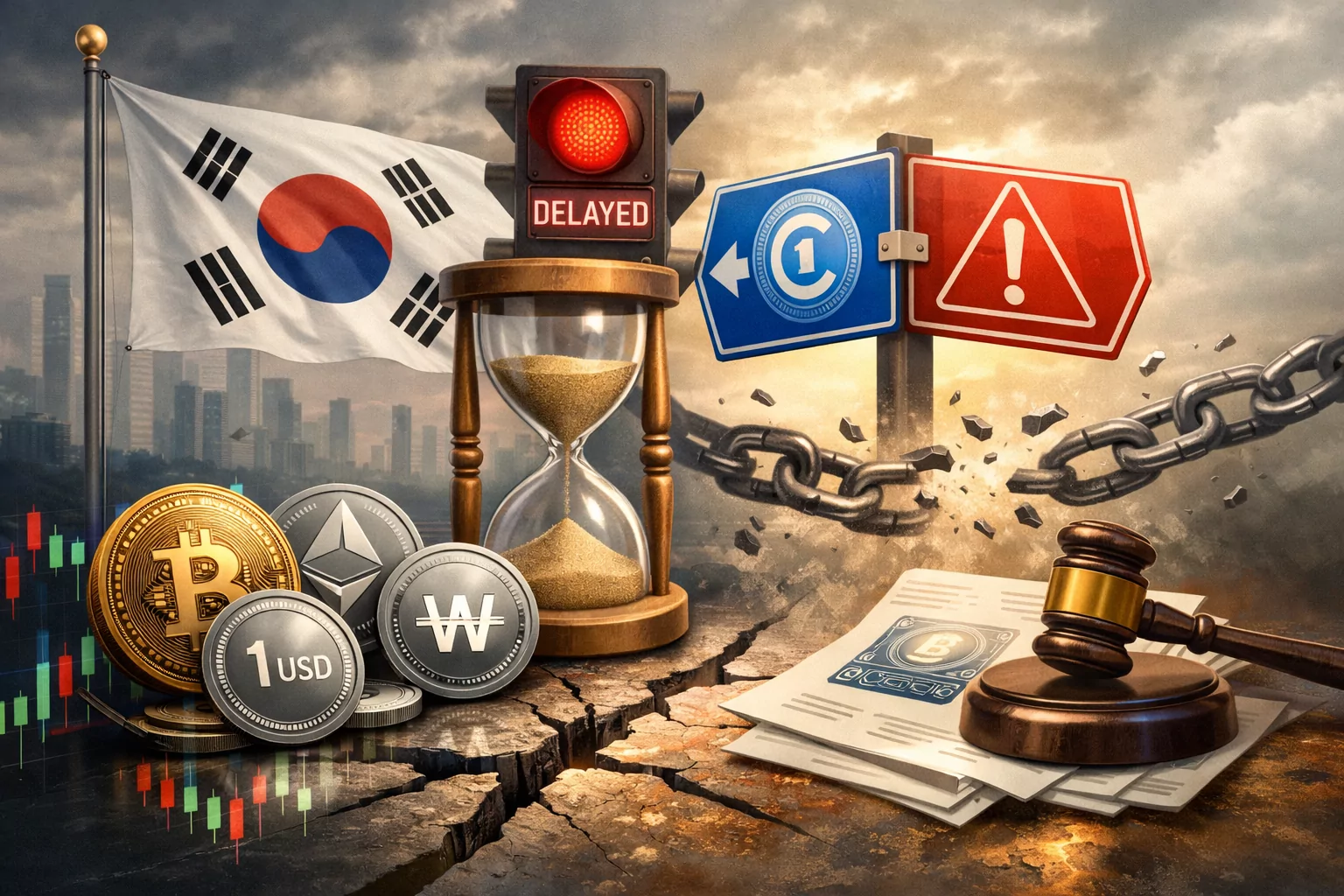
South Korea, one of Asia’s most dynamic cryptocurrency hubs, has decided to delay the implementation of its highly anticipated Digital Asset Basic Law until 2026. This postponement stems from unresolved disputes over stablecoin regulatory authority, underscoring the complexities surrounding crypto regulation in an evolving financial landscape.
Why the Digital Asset Law Matters
The Digital Asset Basic Law is intended to provide a robust framework for governing South Korea’s burgeoning cryptocurrency market. By enforcing stricter operational standards and addressing systemic risks, the law aims to enhance investor protection while fostering a secure and transparent digital environment. Central to this legislation is the introduction of no-fault liability, holding digital asset operators accountable for user losses, whether or not negligence is proven.
The Stablecoin Debate: A Major Sticking Point
Stablecoins, cryptocurrency tokens designed to maintain a consistent value, have emerged as the focal point of the regulatory dilemma. South Korean authorities are at odds over who should supervise the reserves backing these stablecoins. The Financial Services Commission (FSC) and the Bank of Korea (BoK) continue to disagree on dividing enforcement powers and responsibilities for managing reserves.
Notably, the proposed law requires stablecoin issuers to maintain reserves exceeding 100% of their circulating supply. These reserves must be held in approved financial institutions, independent of the issuer’s balance sheet, to mitigate systemic risks. However, the lack of consensus has resulted in regulators opting to delay the law’s introduction instead of advancing an incomplete framework.
Implications for the Crypto Industry and Investors
The delay in legislation introduces regulatory uncertainty for exchanges, stablecoin issuers, and other crypto business operators in South Korea. Many firms may postpone launching new products or expanding operations, while some could explore relocating to jurisdictions with more transparent regulations. For investors, this uncertainty complicates risk assessments and compliance strategies, underscoring the importance of clarity in regulatory frameworks.
Policy and Political Dynamics
President Lee Jae Myung has heightened the focus on stablecoin regulation by proposing the introduction of a Korean won-backed stablecoin. This initiative aims to counter the dominance of US dollar-pegged stablecoins on the global stage, adding a layer of national strategic interest to the ongoing debate over monetary sovereignty and digital assets.
Meanwhile, lawmakers are working to merge various legislative proposals into a comprehensive crypto bill. This unified approach may streamline efforts to align financial innovation with broader monetary policy objectives.
No Immediate Market Reaction, But Uncertainty Looms
Although the delay in introducing the Digital Asset Basic Law has not triggered a significant market reaction, the ongoing regulatory indecision adds a layer of uncertainty for investors and businesses alike. Market participants now face extended ambiguity, unsure what the future holds for crypto regulation in South Korea.
Recommended Reading and Resources
For crypto investors and enthusiasts looking for secure platforms to manage their digital assets safely, exploring eToro could be a worthwhile choice. eToro offers access to a wide range of cryptocurrencies while enabling users to mimic the trading strategies of high-performing investors. Note that trading carries risks, and careful investment decisions are essential.
Invest in your knowledge and preparedness as South Korea continues to navigate its crypto regulatory landscape. Stay informed to make smarter financial decisions in the fast-evolving global digital asset ecosystem.


