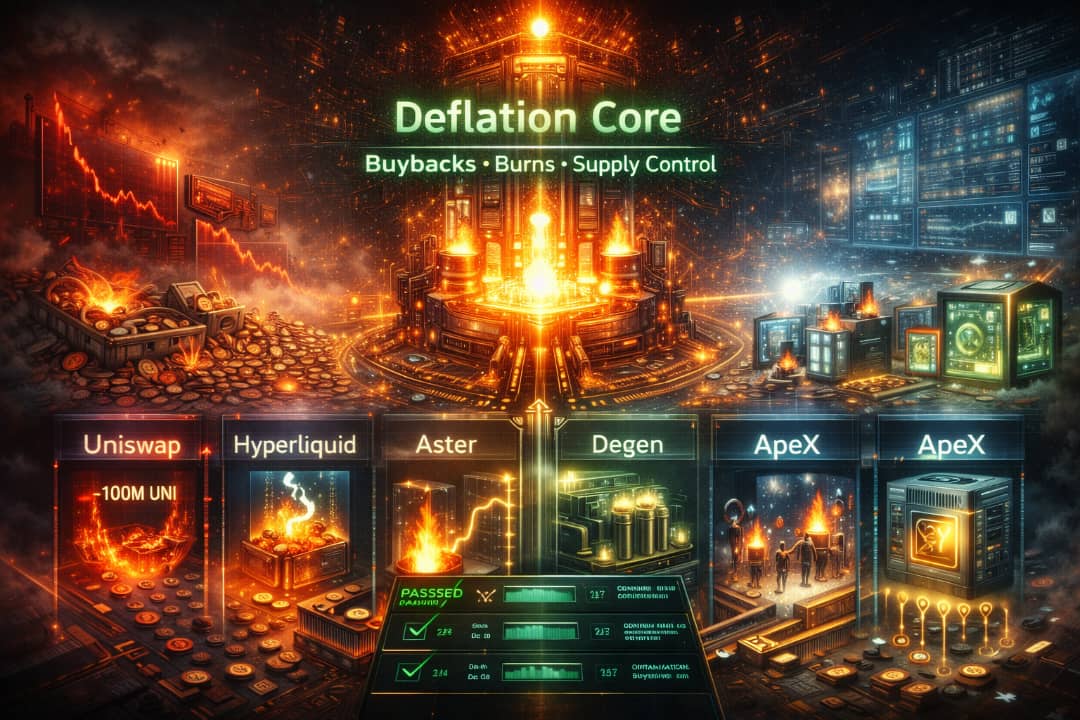
Decentralized Finance (DeFi) protocols are undergoing significant shifts in tokenomics with key trends like buybacks, burns, emission cuts, and treasury realignments becoming the new norm. From protocols tightening token supply to governance votes reshaping operational priorities, the impact is reverberating across the ecosystem. Let’s dive into the latest developments from major DeFi protocols like Uniswap, Hyperliquid, and more, and what these changes mean for the future of tokenomics.
Uniswap’s UNIfication Proposal: A New Era of Governance
Uniswap, a leading decentralized exchange in the DeFi space, is making headlines with its voting on the UNIfication proposal. This sweeping governance initiative aims to consolidate ecosystem development, activate protocol fees, and implement a significant supply burn of 100 million UNI from the DAO treasury. The vote is set to close on December 25, with over 69 million UNI votes already cast in favor, signaling strong community support.
Markets are reacting positively, with UNI seeing a 25% price increase on the news. More than a reactionary price rally, however, this shift could permanently reshape Uniswap’s model by aligning fees with holders and reducing supply. This strategic move sets a precedent for other DAOs navigating excess reserves and governance challenges.
Hyperliquid’s Strategic Burn and Unlock
For Hyperliquid, the current focus is a $1 billion HYPE token burn proposal, set to conclude on December 24. Coinciding with this is a scheduled token unlock on December 29, releasing $250 million worth of tokens from team allocations into circulation. The delicate balance between reducing supply and managing market psychology highlights Hyperliquid’s active approach to shaping token economics.
The burn offsets dilution concerns, while the controlled unlock demonstrates nuanced governance aimed at maintaining market confidence. Hyperliquid’s strategic measures reflect the protocol’s engagement with token holders and its commitment to disciplined supply control.
Aster’s Sustained Buyback and Emission Reduction
Aster is taking a long-term operational approach to its tokenomics. Starting December 22, the protocol intends to reduce token emissions while launching Stage 5 of its buyback program. This program allocates up to 80% of daily platform fees toward on-chain ASTER token buybacks. By tying token demand directly to platform activity, Aster ensures a self-sustaining feedback loop where rising activity intensifies buy pressure and supply contractions.
For those invested in the protocol, Aster’s steady approach showcases its focus on ensuring long-term value capture and robust governance.
Degen and ApeX: Cultural and Conservative Strategies
Degen’s unique tokenomics experiment involves matching burn percentages with every user tip sent through its app, turning its community into active participants in supply reduction. This cultural reinforcement mechanism, though temporary, highlights the potential of user-driven token economics.
ApeX, on the other hand, has implemented a conservative but credible buyback strategy, using $375,000 USDT to repurchase and lock 914,634 APEX tokens for three years. While not a direct burn, this lock significantly reduces circulating supply, demonstrating confidence in the protocol’s future growth via a strategic long-term lock period.
The Broader Impact of Tokenomics
Collectively, these moves mark a shift toward responsible supply management and governance maturity in DeFi. Protocols are no longer content with inflationary defaults. They are actively engaging with token holders, scrutinizing treasury reserves, and using disciplined buybacks, burns, and emission cuts to align incentives.
For users or investors looking to explore DeFi protocols further, staying updated on governance proposals is essential. Protocols like Uniswap and Aster exemplify tokenomics as a key product feature rather than a mere afterthought. This structural shift could serve as a benchmark for future developments in the decentralized finance ecosystem.
Recommended Product: Ledger Nano X
As you navigate the evolving world of DeFi, ensure your digital assets are safe with the Ledger Nano X, a hardware wallet designed to secure cryptocurrencies like UNI, HYPE, or ASTER. With Bluetooth functionality and robust security measures, it’s a must-have tool for protecting your investments in decentralized ecosystems.



