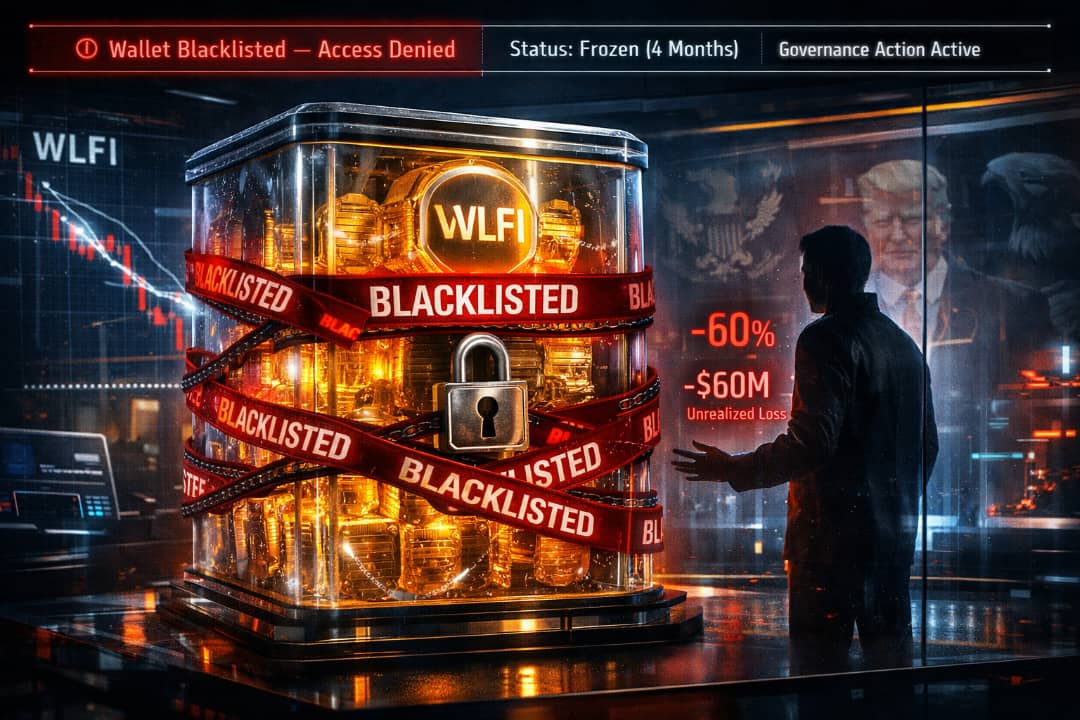
Justin Sun, a prominent figure in the cryptocurrency industry and founder of TRON, continues to face significant challenges following a three-month-long blacklist imposed by World Liberty Financial (WLFI). This restriction, initiated in September, has contributed to a staggering $60 million loss in the value of his frozen WLFI tokens. The ongoing dispute is shedding light on broader concerns within the crypto ecosystem surrounding governance, transparency, and investor protections.
Why Was Justin Sun Blacklisted?
The standoff began in September when World Liberty Financial blacklisted an address linked to Sun, shortly after receiving a transfer of $9 million in WLFI tokens. This swift action froze the address, halting all transfers and access to the tokens without disclosing specific compliance or governance concerns. The impact of this decision has been profound, leaving Sun unable to sell or manage his holdings during a period of extreme market volatility.
A Market in Decline
The broader market downturn has amplified the effects of the blacklist. Since September, WLFI has dropped over 60% in value, slashing Sun’s holdings by millions. While other investors mitigated losses by selling their tokens or reducing exposure, Sun’s immobilized assets left him unable to react, resulting in a $60 million paper loss according to blockchain analytics firm Bubblemaps.
The Bigger Picture: Crypto Governance and Investor Trust
The implications of this blacklist extend beyond Sun’s financial loss. As a high-profile investor who directed over $75 million into WLFI and an additional $100 million into TRUMP-affiliated memecoin projects, Sun’s predicament has ignited considerable debate within the crypto community. The case highlights risks associated with governance mechanisms like blacklisting, especially when applied to significant investors without transparent dispute resolution processes.
While blacklisting tools are designed to safeguard crypto ecosystems from malicious activity, this case raises tough questions: How should governance decisions balance enforcement with transparency? How are major investors protected in volatile markets? Without clear answers, trust in politically aligned crypto projects like WLFI may erode.
Justin Sun’s Response
Since the blacklist’s initiation, Justin Sun has denied any wrongdoing, maintaining that his actions were in line with his stated goal of supporting WLFI for the long term. However, neither Sun nor World Liberty Financial has provided updates or indicated progress toward resolution. The prolonged nature of the standoff points to deeper structural challenges within the crypto ecosystem, particularly regarding governance and dispute management.
What This Means for Investors
Sun’s predicament underscores a critical risk in the crypto world: the lack of clarity and resolution processes during governance disputes. As the crypto space matures, the industry must navigate how to protect both investors and ecosystems in high-stakes situations like this one.
Looking for Resilience? Consider Ledger Nano X
For those navigating the complex world of cryptocurrency, safeguarding your investments is crucial. Products like the Ledger Nano X, a state-of-the-art hardware wallet, can provide an added layer of protection. This secure tool allows you to manage and store assets offline, reducing vulnerability during volatile market movements.
Disclaimer: Cryptocurrency investments are inherently risky. This article is for informational purposes only and should not be considered financial or trading advice. Always conduct thorough research before making any investment decisions.
