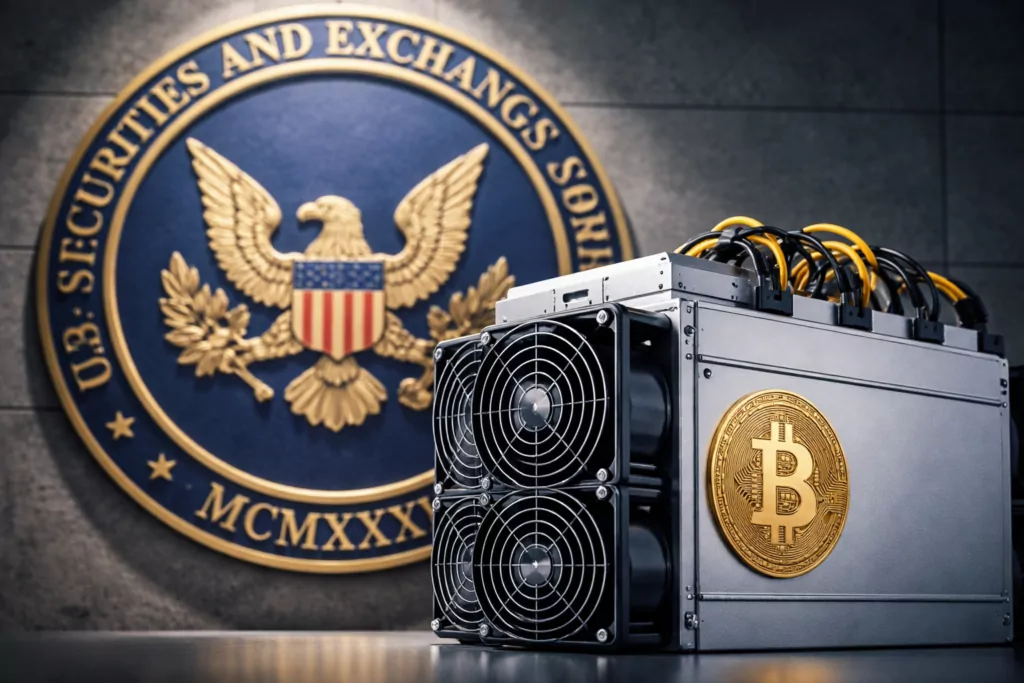
The U.S. Securities and Exchange Commission (SEC) has recently made headlines with a new lawsuit that could reshape how Bitcoin mining and passive income agreements are categorized under federal law. The case targets VBit Technologies and its founder, Danh Vo, accusing them of defrauding investors through overselling mining contracts and misappropriating funds.
The SEC’s Claims Against VBit
According to the SEC, VBit’s so-called ‘hosting agreements’ qualify as unregistered securities. Their judgment relies on the Howey Test, a precedent used to classify investment assets. The Howey Test evaluates whether an arrangement involves an investment of money, a common enterprise, and expectations of profits reliant on the efforts of others. In this case, the SEC alleges that VBit’s hosting offerings met all these criteria.
“VBit’s efforts performed in connection with the Hosting Agreements were entrepreneurial and managerial,” said SEC representatives. The hosting agreements allegedly promised passive income to investors while being fully operated by VBit. Investors were not given ownership or control over mining rigs, further supporting the SEC’s stance that these contracts constitute securities.
Industry Debate: Commodity or Security?
Some industry experts, such as Mitchell Askew, argue that Bitcoin mining activities should classify as commodities rather than securities. Bitcoin mining relies on computational power and is decentralized by nature. However, if mining contracts depend entirely on a third-party’s operations, the waters become murky.
This case could set a new legal precedent for passive mining arrangements, potentially increasing scrutiny for businesses offering similar services. Crypto enthusiasts and businesses alike are keeping a close eye on these developments.
From Biden’s SEC to Atkins’ Leadership: A Regulatory Shift
The lawsuit comes after significant alterations in the SEC’s approach to crypto regulation. Under the Biden administration, former chair Gary Gensler pursued a strict “regulation by enforcement” policy. This led to over 125 crypto enforcement cases and more than $6 billion in penalties.
However, under current chair Paul Atkins, the SEC is adopting a more lenient stance. Recently, the commission rescinded regulatory restrictions like SAB 121, which discouraged banks from offering crypto custody services. Furthermore, the SEC has withdrawn many of its lawsuits involving projects with sufficiently decentralized networks.
Implications for Crypto Investors
For current and aspiring crypto investors, understanding the regulatory framework is critical. If passive mining contracts like those offered by VBit are ruled as securities, companies may need to comply with stringent SEC guidelines. This could impact the availability and profitability of such agreements.
Recommended For You
Looking to dive into cryptocurrency the right way? Start with the Ledger Nano X, a secure hardware wallet for managing your Bitcoin and other digital assets.