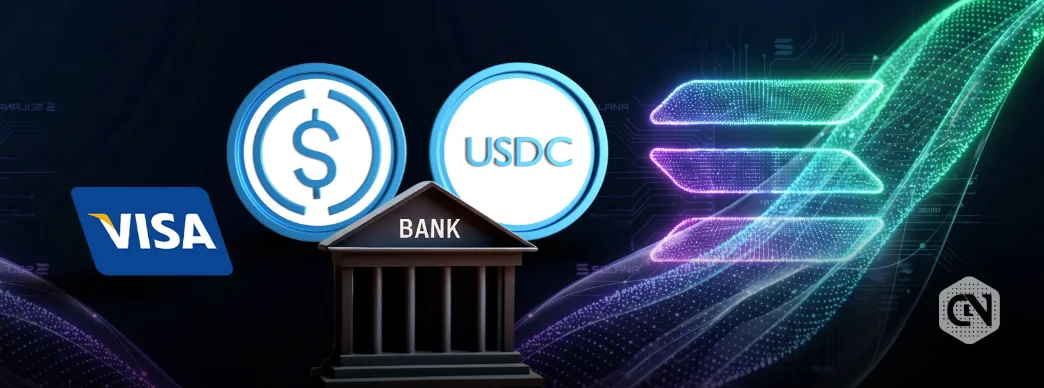
Visa Brings Stablecoin Settlements to US Banks
Visa has officially introduced stablecoin settlement capabilities in the United States. Powered by Circle’s USDC and leveraging the Solana blockchain, this groundbreaking move allows US banks to settle their transactions with Visa using stablecoins. Early pilot programs have already gone live, showing promising results for faster, more predictable transactions.
How Stablecoin Settlement Works
The transition to stablecoin settlements happens seamlessly behind the scenes. While consumer-facing card experiences remain unchanged, banks and fintech institutions benefit from near-instant fund movement. Unlike traditional settlement systems—which often operate only during business days—stablecoins enable transactions to occur 24/7, reducing delays caused by weekends or holidays.
This change is expected to not only speed up settlement cycles but also improve liquidity for financial institutions. Visa stated that as of November 30, its stablecoin settlement program reached a $3.5 billion annualized run rate.
Who’s Leading the Charge?
Cross River Bank and Lead Bank are among the first US-based institutions participating in Visa’s stablecoin settlement program. Cross River Bank, known for its banking infrastructure tailored to crypto and fintech needs, emphasized increasing demand for stablecoin solutions. According to Gilles Gade, Founder and CEO of Cross River Bank, this integration signals a future where traditional finance and blockchain coexist on unified platforms.
Additionally, Visa’s Head of Crypto, Cuy Sheffield, highlighted the importance of solving settlement challenges. “We’re excited to grow the momentum we have with stablecoins, as more banks are looking for faster alternatives that meet security and compliance standards,” said Sheffield. Visa plans to gradually expand access to other banks and partners through 2026.
What This Means for Banks and Businesses
Visa’s stablecoin initiative is bridging the gap between blockchain technology and traditional financial systems. For banks, this means greater control over liquidity and reduced settlement times. To assist institutions in navigating this shift, Visa Consulting & Analytics has introduced a Stablecoins Advisory Practice. This program aims to help businesses integrate stablecoins into their operations, including payments and treasury management.
Early adopters of the advisory practice include VyStar Credit Union and Pathward, demonstrating growing interest in incorporating blockchain-based solutions across various industries. Furthermore, Visa’s partnership with Circle is poised to strengthen. Visa plans to support Circle’s Arc blockchain for future USDC settlements and will even operate a validator node on the new network.
The Evolution of Stablecoins in Financial Systems
Visa’s journey with stablecoins began in 2021 with live settlement pilots. Initially limited to clients in Africa, Latin America, and Asia, these early experiments laid the foundation for today’s US rollout. Over time, Visa has expanded support for additional blockchains and settlement options, positioning stablecoins as integral tools for financial institutions to manage treasury operations.
Stablecoins are no longer just experimental tools—they have evolved into reliable settlement rails for banks. By embedding stablecoin technology directly into its payment network, Visa is signaling a significant transformation in the way money moves across the global financial system.
Discover a Product That Simplifies Crypto Management
If you’re exploring stablecoins or looking to get started with cryptocurrency, consider a platform like Ledger Nano X. This secure hardware wallet supports USDC and ensures the safe management of your digital assets. With its user-friendly interface, it’s perfect for both beginners and experienced users.