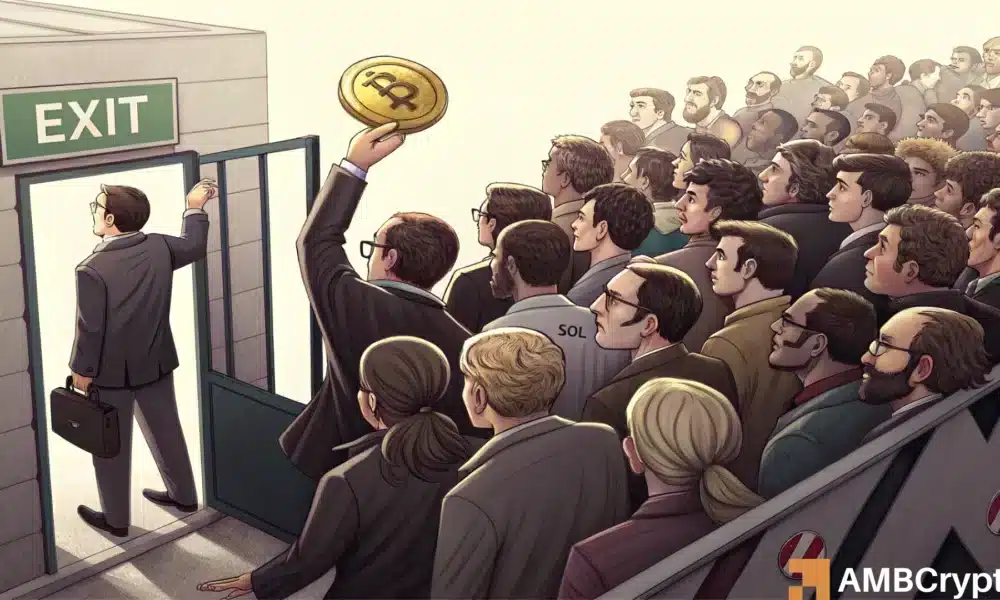
Understanding Solana’s Validator Crisis
Solana (SOL), one of the most prominent Layer 1 blockchain networks, finds itself at a crossroads as it faces a significant validator exodus and waning confidence from investors. The challenges within the network have become a focal point for the crypto community, especially as SOL has experienced a sharp 37% drop this quarter, marking its worst performance since Q2 2022. But what’s driving this crisis, and what does it mean for the future of Solana?
The Validator Exodus
In recent years, Solana’s validator count has steadily declined, with the number of nodes shrinking by an alarming 68% over just two years. The network now holds only around 800 active validators—a concerning trend for a blockchain aiming to establish itself as a mainstay in decentralized finance (DeFi) and Web3 ecosystems.
This decline is largely attributed to rising operational costs. Each validator must stake an increasing amount of SOL tokens just to stay operational—roughly $17 million per block. For many validators, this substantial cost is no longer sustainable, leading to widespread exits.
The Ripple Effect on Solana’s Ecosystem
The exodus of validators has led to questions about network security and overall resilience. Fewer validators mean reduced decentralization, a crucial factor in Solana’s pitch as a competitive blockchain platform. Furthermore, network health metrics indicate a growing imbalance, with short-term and long-term holders feeling the squeeze as SOL’s value struggles to maintain key levels.
The ripple effect is also evident in investor sentiment. Many holders are now either capitulating or scaling back their exposure due to dwindling confidence. Net realized losses are spiking, reinforcing the perception that Solana’s struggles go beyond mere market fluctuations.
Bright Spots in a Bearish Landscape
Despite these challenges, Solana has made strides to regain momentum. Key developments, such as the Firedancer upgrade aimed at improving scalability and performance, and growing institutional interest in tokenized assets, have been positive indicators. Major financial institutions, including JPMorgan, have expressed optimism about Solana’s multi-blockchain ambitions and its potential to play a crucial role in the evolving blockchain ecosystem.
Moreover, the recent launch of Solana ETFs and efforts to enhance mainstream adoption show that the platform is still doubling down on its long-term vision. However, with the market remaining risk-off, these advancements haven’t yet translated into a sustained recovery for SOL.
What Lies Ahead for Solana?
As Solana faces its biggest test yet, the focus remains on its ability to stabilize and address validator concerns. Community trust and network decentralization will be critical metrics to watch. While the short-term outlook remains uncertain, ongoing innovations and strategic partnerships could pave the way for a brighter future—provided the network can navigate its current challenges effectively.
A Recommended Product for Crypto Enthusiasts
For those looking to monitor cryptocurrency trends and make informed decisions, consider the Ledger Nano X, a trusted hardware wallet for securing digital assets. As market volatility persists, having a secure wallet is key to protecting your investments.


