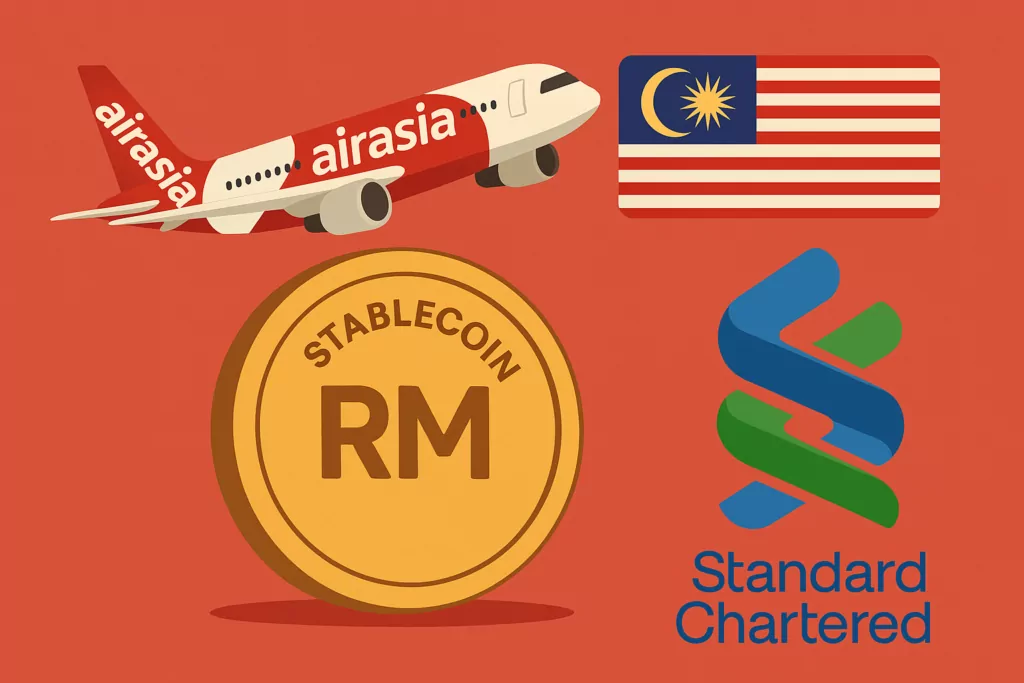
Malaysia is taking a major leap into the digital finance arena with the introduction of a ringgit-backed stablecoin initiative, signaling its intent to explore regulated crypto innovation. This collaborative effort between Capital A, the parent company of AirAsia, and Standard Chartered Bank Malaysia underscores the growing interest in digital asset projects designed within a regulatory framework.
The Details Behind Malaysia’s Stablecoin Initiative
Under this new initiative, a ringgit-backed stablecoin will be piloted in Malaysia via a regulatory sandbox overseen by Bank Negara Malaysia, the country’s central bank. The partnership positions Standard Chartered Malaysia as the issuer of the stablecoin, while Capital A will test its implementation in wholesale use cases. This collaboration marks a strategic move towards bridging traditional banking systems with regulated digital currencies.
The agreement allows for real-world commercial testing within controlled environments, ensuring a balance between innovation and regulatory oversight. This cautious approach mirrors Malaysia’s broader measured stance toward digital finance, allowing for experimentation without exposing the financial system to undue risk.
A Broader Perspective: Capital A’s Strategic Shift
For Capital A, this move is a cornerstone in its transition from a primarily aviation-led organization into a broader tech-driven business. With its roots in AirAsia, the company is restructuring itself to shift focus toward digital ecosystems, financial infrastructure, and innovation. The stablecoin project provides a strategic opportunity for the company to venture into regulated digital assets without entering high-risk retail crypto trading.
The Stablecoin’s Potential and Malaysia’s Vision
By aligning this initiative with its core expertise, Standard Chartered Malaysia is expanding its presence in tokenized fiat systems while leveraging its solid foundation in compliance and payment technologies. For Malaysia as a whole, the ringgit-backed stablecoin dovetails with its gradual yet firm commitment to digital asset experimentation. The oversight of Bank Negara Malaysia ensures the stablecoin remains within regulatory limits, bolstering investor and public trust.
Importantly, this initiative coincides with parallel developments in Malaysia, such as the announcement of a similar ringgit-backed token supported by Malaysian royals. Together, these developments demonstrate a collective institutional pivot toward driving innovation in digital finance while adhering to robust compliance standards.
A Product That Reflects Innovation in Finance
If you’re interested in exploring stablecoins and their potential applications, consider using Coinbase, a trusted platform for buying, selling, and managing digital assets. With an easy-to-use interface and robust security features, it’s the ideal platform for both beginners and experienced investors diving into the world of digital currencies.
What’s Next for Malaysia?
The success of Malaysia’s stablecoin pilot could set the stage for broader adoption of digital assets within the country, encouraging other major players to explore similar projects. As regulated cryptocurrencies gain momentum globally, Malaysia is well-poised to become a prominent player in Southeast Asia’s digital finance ecosystem.