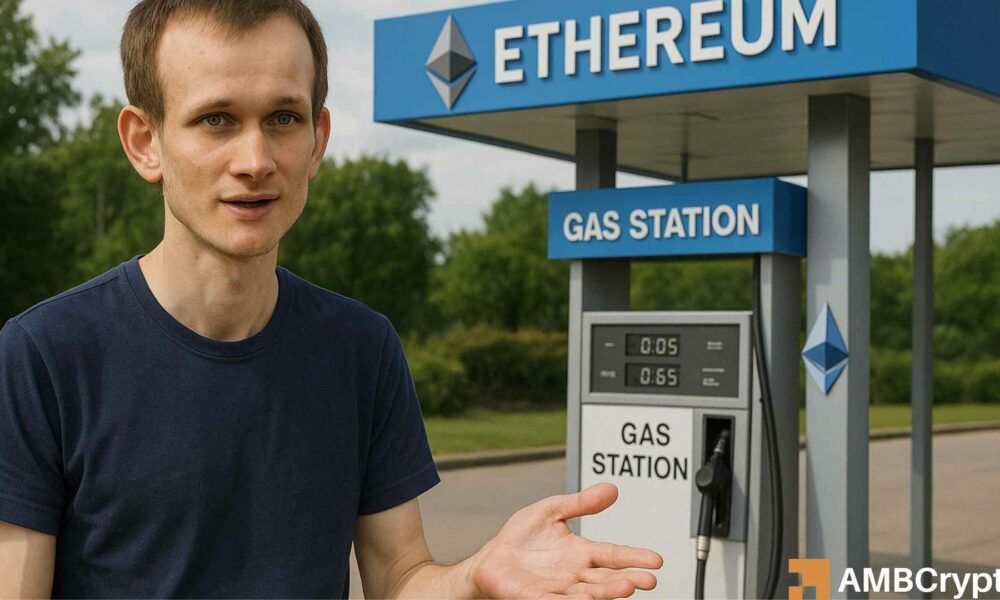
Vitalik Buterin’s Gas Futures Market Proposal: A New Era in Ethereum?
Ethereum Co-Founder Vitalik Buterin recently sparked conversation across the blockchain community by proposing a revolutionary concept: a gas futures market. This idea aims to bring predictability to Ethereum transaction costs, allowing large investors and blockchain users to hedge against price uncertainty. Though innovative and potentially transformative, the proposal has divided opinions among experts.
What is a Gas Futures Market?
In traditional markets, futures contracts allow investors to lock in the price of a commodity, such as oil, to safeguard their finances against unpredictable market fluctuations. Buterin’s gas futures market aims to replicate this mechanism within Ethereum. By allowing users to lock in future gas prices, this market could enable better financial planning for projects reliant on Ethereum transactions.
With Ethereum gas fees often fluctuating due to network congestion, this proposal could add much-needed stability. However, critics argue that creating such a market for Ethereum transactions comes with its own set of challenges.
The Debate: Supporters vs. Skeptics
Some, like Kevin Lepsoe, founder of ETHGas, are cautiously optimistic. Lepsoe acknowledged the potential merits of Buterin’s idea but voiced concerns regarding possible manipulation by network validators. He suggested that such a system might function better on Layer 2 solutions (L2s), which handle transactions off the main Ethereum chain to reduce congestion and fees.
On the other hand, skeptics like blockchain expert Jason Chen believe that a futures market for Ethereum’s gas isn’t viable. Chen pointed out that Ethereum gas demand is inherently more dispersed than traditional commodities like oil. “Users pay gas directly,” he explained, “and there aren’t centralized, large-scale users dominating demand like in traditional markets.”
Scaling Solutions Already Reducing Gas Costs
Ethereum’s recent advancements, including updates from its Fusaka and Pectra scaling upgrades, have successfully reduced gas fees in recent months. These efforts have made Ethereum more competitive with alternative smart contract platforms like Solana and Sui, whose transaction costs have historically been lower.
These changes highlight the network’s commitment to evolving for its users. However, the roadmap for Ethereum’s continued scaling remains uncertain, leaving room for potential price volatility. Buterin’s gas futures proposal seeks to address this uncertainty, offering a way for users to preemptively manage costs in an unpredictable environment.
The Future of Ethereum Transaction Fees
As Ethereum continues to evolve, its transaction fees are likely to remain a hot topic of discussion. While Buterin’s gas futures market idea aims to tackle unpredictability, it will need to overcome significant challenges to gain widespread adoption.
For traders and developers operating on Ethereum, tools to predict and stabilize costs could be game-changing. If you’re already working in the crypto space or just beginning to explore it, keeping track of Ethereum’s evolving ecosystem is crucial.
Recommended Blockchain Resources
To optimize your interaction with Ethereum and similar networks, consider using products like MetaMask, a user-friendly wallet for Ethereum transactions. Additionally, platforms like ETH Gas Station can help monitor gas fees in real time.
While Buterin’s gas futures idea might not take effect immediately, it’s a compelling glimpse into Ethereum’s potential for innovation. Whether you’re an investor or developer, staying informed now could prepare you for impactful changes in the near future.



