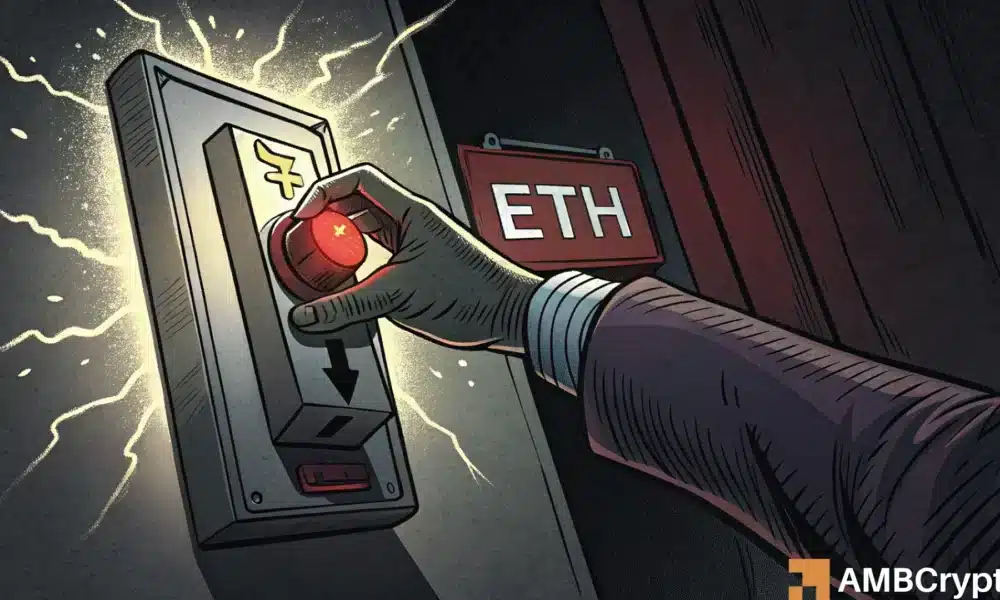
Understanding Ethereum’s Fusaka Upgrade
Ethereum’s much-anticipated Fusaka upgrade is officially going live on December 3rd, promising significant improvements in scalability, cost efficiency, and network throughput. This development could mark a turning point for Ethereum’s ecosystem and price trajectory. But can this upgrade, like the Pectra upgrade seen earlier this year, drive an ETH rally toward $7,000?
Breaking Down the Fusaka Upgrade
At the heart of Fusaka lies EIP-7594, called PeerDAS. This proposal revolutionizes how rollup data is managed on Ethereum’s blockchain by enabling nodes to verify smaller data samples instead of processing entire data blobs. This change reduces bandwidth requirements and creates more space for rollup activities—a critical factor for Ethereum’s scalability.
Another significant benefit is how Fusaka enables Ethereum to scale blob capacity without the need for continuous hard forks. This innovation supports the network in rolling out incremental yet impactful upgrades, accelerating its development pace.
Ethereum Price Predictions: Will Fusaka Make A Difference?
Historically, network upgrades have demonstrated the potential to rally investor sentiment. For instance, Ethereum witnessed a 58% rally during the Pectra upgrade in May. However, Fusaka’s market impact remains uncertain, as Ethereum’s recent price performance has been rather muted with no strong bullish reversal in sight.
Key market data at present shows elevated Open Interest above $17 billion, paired with slightly positive funding rates. While the optimism suggests the possibility of an upward price movement, indicators such as RSI and MACD reveal that momentum remains stagnant.
For Ethereum to push toward the $7,000 target, it will need to recover critical resistance zones in the $3,500–$3,800 range and sustain trend-driven momentum similar to Pectra’s impact. At the time of writing, ETH is stabilizing near the $3,000 mark, struggling to regain a bullish trajectory.
Scalability in Action
Data from GrowThePie underscores Ethereum’s progress in network scalability. The network, along with its Layer 2 solutions, achieved an all-time high throughput of 33,000 TPS, driven largely by Lighter’s zero-knowledge rollup activity. Additionally, Ethereum increased its gas limit from 45 million to 60 million, allowing for more daily transactions.
The Fusaka upgrade aims to build on these achievements. If higher capacity translates into lower fees, enhanced user experiences, and growing rollup demand, Ethereum could see substantial long-term benefits. However, the true impact depends on how the ecosystem responds to these enhancements after the upgrade.
Upgrade with Tech-Savvy Tools
If you’re an Ethereum investor or blockchain enthusiast, preparing for the post-upgrade opportunities is essential. Consider using tools like MetaMask, one of the leading wallets for managing Ethereum and other crypto assets. With its integrated Layer 2 support, it enables smoother interactions with the Ethereum ecosystem, ensuring you stay ahead in the game.
Final Thoughts
The Fusaka upgrade marks another step forward for Ethereum’s journey toward greater scalability and innovation. While the upgrade alone may not guarantee a significant rally toward $7,000, it lays a strong foundation for the ecosystem’s future. Investors and users alike should keep an eye on how the network evolves post-upgrade, as real-world adoption will dictate Ethereum’s ultimate success.



