Global Markets Update: Key Events Impacting Stocks, Crypto, and Policies
The global economic pulse at the start of the week showcased a blend of cautious optimism and persistent market challenges. From cryptocurrency selloffs to structural reforms in Australia’s Defence Department, here’s a deep dive into the critical developments shaking international markets.
Australia’s Defence Overhaul: A New Era of Efficiency
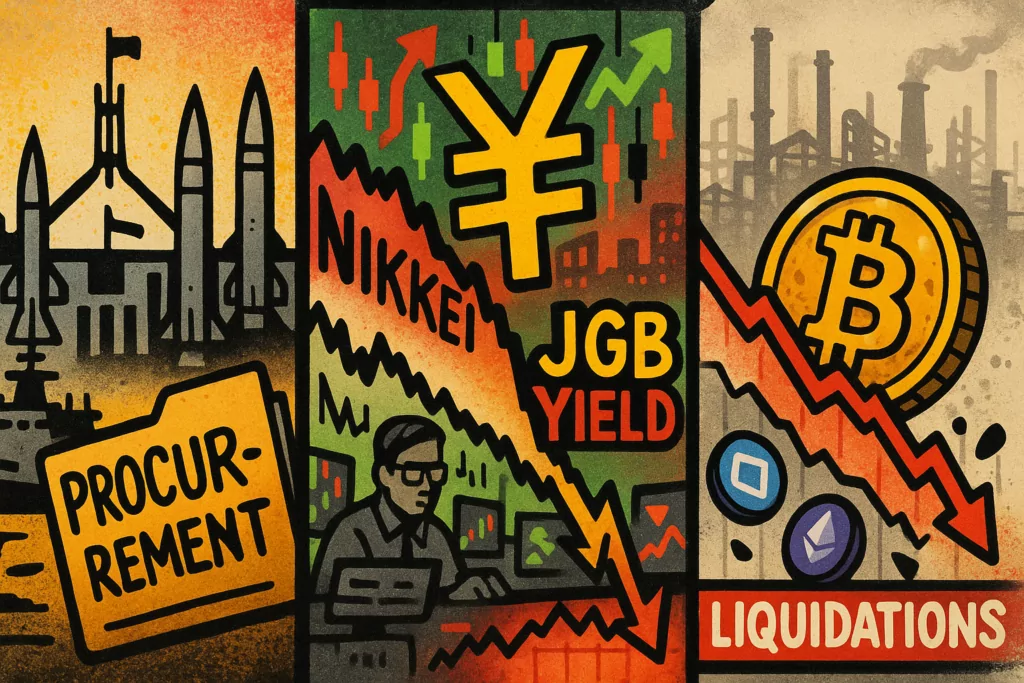
Australia revealed a bold restructuring strategy to streamline its Defence Department. Richard Marles, the Australian Defence Minister, announced plans to consolidate the Capability Acquisition and Sustainment Group (CASG), Naval Shipbuilding and Sustainment Group (NSSG), and Guided Weapons and Explosive Ordnance (GWEO) Group into a single entity: the Defence Delivery Agency. The new agency, set to operate by July 2026 and become autonomous by mid-2027, will aim to optimize defence spending while improving coordination with the Defence Department and Australian Defence Force.
As part of its streamlined operations, the agency will have a national armaments director to enhance accountability and independence. According to Marles, the primary goal is to achieve a “better bang for the buck” when allocating defence resources.
Asian Markets Show Mixed Sentiment
Regional equity markets began the week on a cautious note. The Japanese yen strengthened against the US dollar to approximately 155.58, fueled by signals from Bank of Japan Governor Kazuo Ueda regarding potential rate hikes. This shift in sentiment led to a 2% dip in Japan’s Nikkei index, while government bond yields climbed to highs not seen since 2008.
In contrast, Hong Kong’s Hang Seng Index and India’s Nifty 50 showed gains. The Nifty 50 index hit a new all-time high, supported by robust GDP growth data. However, broader equity sentiment remains uncertain, driven by concerns about slowing Chinese manufacturing and inconsistent regional performance.
Cryptocurrency Markets in Turmoil
Cryptocurrency markets faced significant pressure this week, with Bitcoin dropping below the $86,000 mark, down 5.3% in 24 hours. Ether, Solana, and XRP also tumbled, experiencing decreases between 5.5% and 7.6%. The sharp decline resulted in over $144 billion being wiped out of crypto market capitalization in less than four hours, with leveraged long positions substantially liquidated.
Bitcoin ETFs reported a massive $3.5 billion in November outflows, marking the weakest performance since 2018. The cryptocurrency now faces key resistance between $87,850 and $89,200, with downside risks looming below $86,000. Analysts cite a mix of leveraged trades, cooling enthusiasm, and emerging macroeconomic pressures as significant contributors to the downturn.
China’s Manufacturing Woes Continue
China’s latest private manufacturing PMI fell to 49.9 in November, breaking its short-lived growth streak. The contraction reflects weakened domestic demand, even as exports remained strong. With retail sales, fixed-asset investment, and property market performance continuing to lag, concerns about China’s economic growth dipping below 4.5% in Q4 are escalating. The strain on the manufacturing sector foreshadows slow recovery as global demand eases.
Invest Smarter: ETF and Stock Recommendations
If you’re planning to navigate these turbulent markets, consider diversifying your portfolio with high-growth ETFs like the Vanguard S&P 500 ETF ([VOO]). It offers balanced exposure to top market players while minimizing risk amid fluctuations.
For crypto enthusiasts, platforms like Coinbase remain leading choices for secure trading. But remember, timing is everything in volatile markets, so proceed cautiously.
Conclusion
The global market outlook remains a blend of risk, opportunity, and volatility. Whether it’s defense reforms in Australia, the crypto market’s challenges, or mixed feelings across Asian stocks, staying informed and diversifying investments is key. Stay updated, assess risks, and explore sustainable opportunities to secure long-term growth.